How to Verify Dispatch Riders Before Their First Delivery in Nigeria
A new rider is ready to start, but is your business ready to hand over customer deliveries? Identity checks, driving credentials and a consistent onboarding process matter before the first assignment.
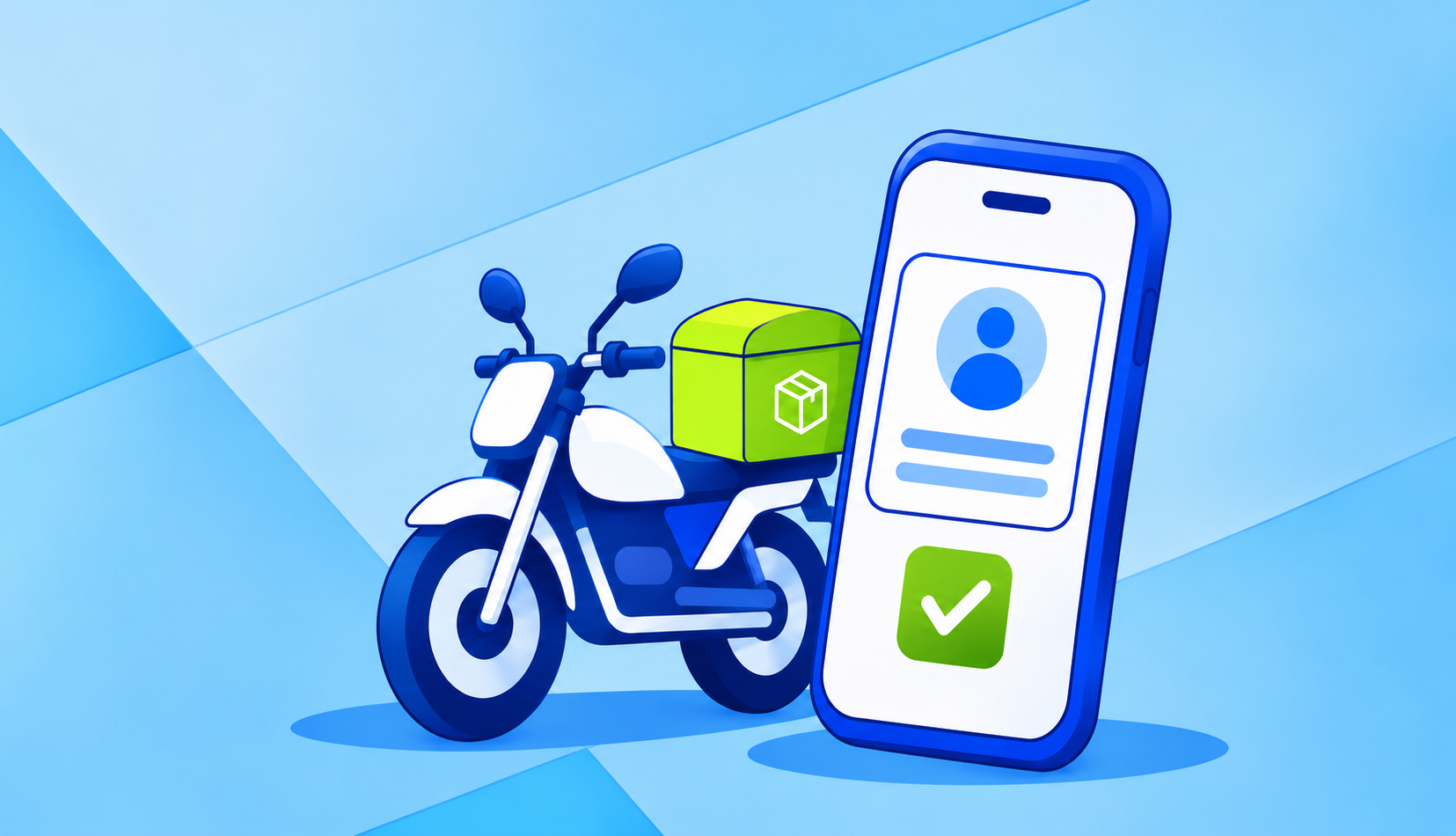
Your logistics company has more delivery requests than your current riders can handle. You've found three new riders who are available to start tomorrow, and your operations manager is eager to get them on the road.
They've submitted their names, phone numbers and photographs of their IDs. One came through a referral from an existing rider, while the other two responded to your recruitment advert.
But before assigning them customer parcels, how much do you actually know about the people joining your fleet?
For logistics businesses in Nigeria, rider recruitment often moves quickly. Customers expect timely deliveries, available riders are in demand, and keeping operations running can take priority over completing every onboarding check.
The problem is that collecting a rider's information doesn't establish that the details are genuine or that the person presenting them is the rightful identity holder. When multiple employees are involved in recruitment and onboarding, it's also easy to lose track of which checks have been completed.
A structured verification process helps logistics businesses establish who they're onboarding, review the necessary credentials and keep clear records before riders begin handling deliveries.
Here's how to put that process in place.
What should you check before onboarding a dispatch rider?
A reliable rider onboarding process should cover identity verification, driving credentials, contact information and operational readiness. These checks serve different purposes, but together they help your business make informed decisions about who joins its delivery operations.
1. Verify the rider's identity
The first step is confirming that the person applying to join your fleet is who they claim to be.
Many logistics companies collect a national identity document, photograph and phone number during registration. While these provide useful information, simply receiving an ID photograph doesn't establish whether the identity details are genuine.
Identity verification goes further by checking the information provided against official identity records.
In Nigeria, NIN-based verification gives businesses a way to validate identity details against government-backed records. Face matching and liveness checks add another layer by comparing the person completing verification with the identity being presented.
For logistics operators recruiting riders remotely, this makes it possible to complete identity checks before applicants arrive for training, equipment collection or their first assignment.
It also creates a consistent verification process for riders recruited through different channels, including agencies, online applications and referrals.
2. Confirm the rider's driving credentials
A rider's identity and their authorisation to operate a delivery motorcycle are separate things, and both need attention during onboarding.
Check the rider's driver's licence, including the expiry date and whether the licence class is appropriate for the vehicle they will operate. Where further confirmation is needed, use the relevant official licensing channels, including those provided by the Federal Road Safety Corps (FRSC).
If your company operates across different states, your operations team should also keep track of the applicable rules governing motorcycle and commercial delivery operations in those locations.
Completing these checks before assigning deliveries helps establish whether the rider meets the driving requirements for the role.
3. Collect the contact and onboarding information you need
Your operations team needs more than a name and phone number to manage a rider effectively.
Depending on your employment or contractor arrangements, your onboarding requirements may include a residential address, emergency contact, application reference and other relevant details.
Some Nigerian logistics businesses also require a guarantor as part of their recruitment process. If your company does, collect the required guarantor information and complete your established checks before approving the rider.
The important thing is to have a consistent process that applies to every applicant, rather than collecting different information depending on who handles the recruitment.
4. Confirm operational readiness
Before activating a rider, check that they've completed the requirements specific to your delivery business.
For company-owned motorcycles, this may include vehicle assignment, equipment collection and documentation of the vehicle's condition. For riders using their own motorcycles, your team may need to review the relevant vehicle documents and insurance arrangements.
Riders should also understand the company's delivery procedures, parcel handling expectations, escalation process and other operational requirements.
Once these steps are complete, an authorised team member can approve the rider for activation.
How to verify dispatch riders remotely with CheckIn
If your company recruits riders across several cities, handling every identity check manually can slow down onboarding.
Imagine you're recruiting ten riders in Lagos, five in Ibadan and another five in Abuja. Asking every applicant to visit a central office simply to submit identity information creates unnecessary work for both your team and the riders.
CheckIn by Dojah gives logistics businesses a simpler way to manage this part of onboarding.
Built on Dojah's identity verification infrastructure, CheckIn provides government-backed identity checks, face matching and liveness verification through a self-service platform. Your team can set up the required verification, send riders a link and manage their submissions from one dashboard without building an API integration.
Choose the verification checks your business needs
CheckIn provides ready-made Individual KYC Basic and Individual KYC Advanced templates, with the included checks and credit costs displayed when you select a template.
You can choose the option that fits your onboarding requirements and customise the information riders need to provide.
For example, you can include an application reference, recruitment location, or other questions that help your team connect the identity verification result to the correct applicant.
You can also add your company's branding and configure how submissions will be reviewed.
This allows you to establish a standard verification process that your recruitment team can use across different locations.
Send riders a verification link
Once your CheckIn account is approved and your verification is published, you can generate a link or QR code to share with applicants.
A rider applying from Ibadan to join your Lagos delivery operation can open the link on their smartphone, provide the requested information, and complete the selected identity checks remotely.
There's no separate application for the rider to download.
Instead of asking applicants to send identity documents to different employees, your company can direct everyone through the same verification process.
This is particularly useful during recruitment drives, when you're onboarding several riders within a short period.
Review submissions from one dashboard
After riders complete their checks, their submissions appear in the CheckIn dashboard.
Your team can review verification outcomes, search existing submissions, and identify applications that need attention.
CheckIn supports automatic, semi-automatic, and manual review options, allowing your business to configure how submissions are handled.
For example, your team can use automatic processing for routine successful checks while reviewing flagged submissions separately. Authorised employees can examine results, add internal notes, and determine the appropriate follow-up.
You can also download verification reports and assign team permissions, so employees responsible for onboarding have access to the information they need.
Rather than treating identity checks as an isolated administrative task, your team has a clear record of who has completed verification and which applications still require review.
Managing rider onboarding as your fleet grows
Verifying five riders is relatively straightforward. Managing verification for fifty applicants across multiple locations requires more coordination.
Your recruitment team may collect applications, an operations supervisor may check driving credentials, and another employee may handle final activation.
The easiest way to keep the process consistent is to separate verification from activation.
A typical onboarding process can follow these stages:
Stage | What happens |
|---|---|
Rider registration | Collect application and contact information |
Identity verification | Complete identity checks and review the results |
Credential review | Check the rider's licence and relevant documents |
Operational onboarding | Complete equipment, vehicle and training requirements |
Final approval | An authorised employee confirms the requirements are complete |
Activation | The rider begins receiving delivery assignments |
With CheckIn handling the identity verification stage, your team can review those results while continuing the other parts of onboarding.
This also makes it easier to manage riders referred by existing employees or recruited through third-party agencies. Regardless of where an applicant comes from, they complete the same identity verification process before activation.
What happens when a rider's verification is flagged?
Not every verification submission will be successful on the first attempt. An applicant may submit incomplete information, enter inconsistent details or encounter a result that requires further review.
Your team should investigate the issue rather than treating every unsuccessful check as evidence of fraud.
With CheckIn, authorised employees can review flagged submissions and record the outcome. If additional information is required, the applicant can be contacted and the issue addressed through your established process.
An employee responsible for onboarding should review unresolved verification issues before making the final activation decision.
This provides a consistent way to manage exceptions while ensuring that identity verification results inform, rather than automatically determine, employment or contractor decisions.
Keep rider information organised
Rider onboarding involves collecting personal information, including identity details and, for selected checks, facial data. Applicants should know what information is being collected and how it will be used.
Your company should also control which employees can access verification records and establish appropriate retention periods, including for unsuccessful applicants.
CheckIn's dashboard, verification reports and role-based team permissions help keep identity verification information organised and accessible to authorised staff.
How much does dispatch rider verification cost with CheckIn?
When you're onboarding riders regularly, verification costs become part of your recruitment budget.
CheckIn uses a pay-as-you-go credit model without a monthly software subscription. You purchase credits and use them for the verification checks your business runs.
Verification template | Credits per verification |
|---|---|
Individual KYC Basic | 1 credit |
Individual KYC Advanced | 5 credits |
The naira cost depends on the package selected, and current rates are available on the CheckIn pricing page.
Your team can also monitor credit usage, review transactions and configure automatic top-ups and spending controls from the dashboard.
For logistics companies onboarding riders throughout the year, this provides a way to plan verification spending according to recruitment activity.
Dispatch rider onboarding checklist
Before approving a rider for their first delivery, use this checklist to confirm that the important steps have been completed.
Check | What your team should confirm |
|---|---|
Identity verification | Rider's identity details have been verified |
Face matching and liveness | Selected identity-holder checks have been completed |
Driving credentials | Licence and applicable driving requirements have been reviewed |
Contact details | Required contact and emergency information is complete |
Guarantor information | Required guarantor checks have been completed, where applicable |
Vehicle and equipment | Relevant vehicle and operational arrangements are complete |
Onboarding records | Verification outcomes and supporting information are documented |
Final approval | An authorised employee has approved the rider for activation |
This checklist works for directly employed riders, contract couriers and delivery partners, with adjustments for the requirements of each operating model.
Know who's joining your delivery fleet
As your logistics business grows, every new rider becomes part of the experience your customers have with your company. Your onboarding process should give your team confidence in the identities of the people handling those deliveries.
CheckIn makes that process easier by bringing government-backed identity checks, remote verification links and submission management into one platform.
Your recruitment team can verify riders before activation, review results from one dashboard and maintain consistent identity verification across different locations without involving developers.
Start verifying dispatch riders with CheckIn
Frequently asked questions
Can I verify dispatch riders online in Nigeria?
Yes. CheckIn allows Nigerian logistics businesses to complete government-backed identity checks remotely through shareable verification links. You can also select available face matching and liveness checks as part of your verification process.
Do riders need to visit an office for identity verification?
No. Riders can complete CheckIn's link-based identity verification on their smartphones. Your business can arrange separate in-person activities for training, equipment collection or other onboarding requirements.
Can I verify multiple riders during recruitment?
Yes. You can share a published CheckIn verification link with multiple applicants and manage their individual submissions through the dashboard.
Does CheckIn verify motorcycle licences?
No. CheckIn handles identity verification. Your operations team should complete motorcycle licence checks through the appropriate official channels.
Should I verify a rider who comes through a trusted referral?
Yes. A recommendation can help you find a candidate, but it doesn't replace independent identity verification. Applying the same checks to every rider gives your recruitment team a consistent onboarding standard.
Can identity verification prevent parcel theft?
No. Identity verification establishes who you're onboarding. Parcel tracking, handover controls, operational supervision and other safeguards remain important for managing delivery risks.
Filed under