Car Rental ID Verification: What Should You Check Before Giving a Customer the Keys?
A driver's licence or ID copy doesn't always establish who is collecting the vehicle. Learn what car rental businesses should check before handing over the keys.
Car Rental ID Verification: What Should You Check Before Giving a Customer the Keys?
A customer has made a reservation, provided their details and arrived to collect the car. Before the keys change hands, the rental business still has an important job to do: establish who is actually taking possession of the vehicle.
For some rental businesses, this starts with asking the customer to send a photo of their ID or driver's licence. Others collect these documents over WhatsApp, email or at the rental desk. Having those documents is useful, but collecting them and verifying the person presenting them are not quite the same thing.
Car rental ID verification is about connecting the customer standing at the counter, completing an online pickup or arranging a remote handover to the identity they have provided. It should also sit alongside, rather than replace, the other checks a rental company needs to make before releasing a vehicle.
So, what should you actually check before handing over the keys?
1. Confirm Who Is Actually Collecting the Vehicle
Start with the person taking possession of the car.
This sounds obvious until the person who booked the vehicle is not the person who arrives to collect it.
A company may make a reservation for an employee. One family member may book for another. An assistant may arrange a rental on behalf of an executive. A customer may also ask whether a friend or relative can collect the vehicle for them.
Your process should make it clear:
- who made the reservation
- who is paying for the rental
- who will collect the vehicle
- who is authorised to drive it
- whose identity needs to be verified
Those people may be the same person, but don't design the process on the assumption that they always will be.
If someone different arrives for the car, that should be resolved before the vehicle is released rather than treated as a minor change at pickup.
2. Check the Customer's Identity Document
The next step is establishing the identity the customer is presenting. Depending on your market and rental policy, this may involve a passport, national identity document or another accepted government-issued ID.
The purpose is not simply to save a copy. The details on the document should correspond with the customer and the information associated with the rental.
At a minimum, your process should be able to identify obvious inconsistencies such as a different name or an identity document that doesn't belong to the person completing the verification. This distinction matters because an image sent over WhatsApp tells you what document was sent. It does not, by itself, establish that the sender is the person named on it.
3. Establish That the Person and the Identity Belong Together
This is the part that basic document collection can miss. Suppose a customer sends a clear photograph of an identity document. You now have information about an identity, but you still need to connect that identity to the person trying to rent the vehicle. That is where facial verification and liveness checks can form part of the process.
A customer can provide the required identity document and complete a selfie or liveness check so the business has more than a static document image to work with.
For rentals arranged remotely, this is particularly useful because there may be no employee physically present to compare the person with their document before pickup.
The objective is straightforward: verify the person, not just collect their document.
4. Treat the Driver's Licence as a Separate Check
A driver's licence creates an easy point of confusion in rental verification. It contains identity information, but rental businesses also use it to confirm driving-related details.
Those are related but different questions.
Check | Question it helps answer |
|---|---|
Identity verification | Is this person connected to the identity they are presenting? |
Driver's licence check | Has the customer provided the driving credential required by your rental process? |
Booking check | Does the person collecting the car match the approved reservation? |
Payment check | Does the transaction satisfy your payment and rental requirements? |
Verifying someone's identity does not tell you everything you may need to know about their driving eligibility, licence status, rental history or suitability under your rental policy. Likewise, simply receiving a photograph of a driver's licence should not automatically be treated as completing every identity check.
Keep the checks distinct so each one has a clear purpose.
5. Resolve Differences Between the Booking and the Person Collecting the Car
Not every mismatch means something is wrong.
Names can appear differently across systems. A customer may use a shortened name when booking. A company may have made the reservation. Someone may have entered a detail incorrectly.
What matters is having a defined process for resolving those differences.
For example:
Situation | What to establish before handover |
|---|---|
Booking name and verified identity differ | Why they differ and whether the person is authorised to collect |
Another person arrives for the vehicle | Whether your policy allows the change and what checks apply to the new driver |
Identity verification cannot be completed | Whether the issue can be corrected or needs manual review |
Customer provides a different document | Whether the new document is accepted under your policy |
Company booked for an employee | Identity of the person actually collecting and driving the vehicle |
This is better than leaving whoever is handling pickup to make an improvised decision.
6. Complete the Checks Before the Vehicle Leaves
The timing matters. Once the vehicle has been handed over, verification can no longer serve its original purpose in the handover decision.
For counter rentals, the required checks can be completed as part of pickup.
For remote bookings, however, there is an opportunity to move identity verification earlier.
Instead of waiting until the customer arrives, the rental business can send the verification request after booking and require it to be completed before the agreed pickup or delivery.
That can be particularly useful when vehicles are delivered to customers, collected outside normal office hours or handed over with limited face-to-face interaction.
The principle is simple: Complete the checks you rely on to approve the handover before handing over the car.
7. Don't Make WhatsApp Your Verification Record
WhatsApp may be exactly where your customers prefer to communicate. That doesn't mean it needs to become the place where your entire verification process lives.
A chat containing a driver's licence photo, passport image, payment receipt, booking conversation and pickup instructions can quickly become difficult to review consistently.
There is also a difference between having a document somewhere in a conversation and having a completed verification result associated with the customer.
You don't have to stop using WhatsApp. Keep the booking conversation where it works for your business, but move the actual identity check into a defined verification process.
8. Decide What Happens When a Check Needs Attention
Most attention goes to the happy path: customer submits details, everything checks out, vehicle is released. Your process also needs an exception path.
Decide in advance:
- who reviews a verification that needs attention
- whether the customer can try again
- what alternative documents you accept
- how booking and identity differences are resolved
- whether another authorised driver can be substituted
- when the vehicle should remain on hold
This isn't about automatically treating every failed or incomplete check as fraud. Sometimes the issue is simply a poor image, incorrect information or another problem that can be corrected.
The important operational point is that the keys shouldn't be handed over simply because nobody knows what to do next.
9. Run Car Rental ID Verification With CheckIn
You don't need to turn your rental desk into a manual ID-checking operation or build a verification system from scratch.
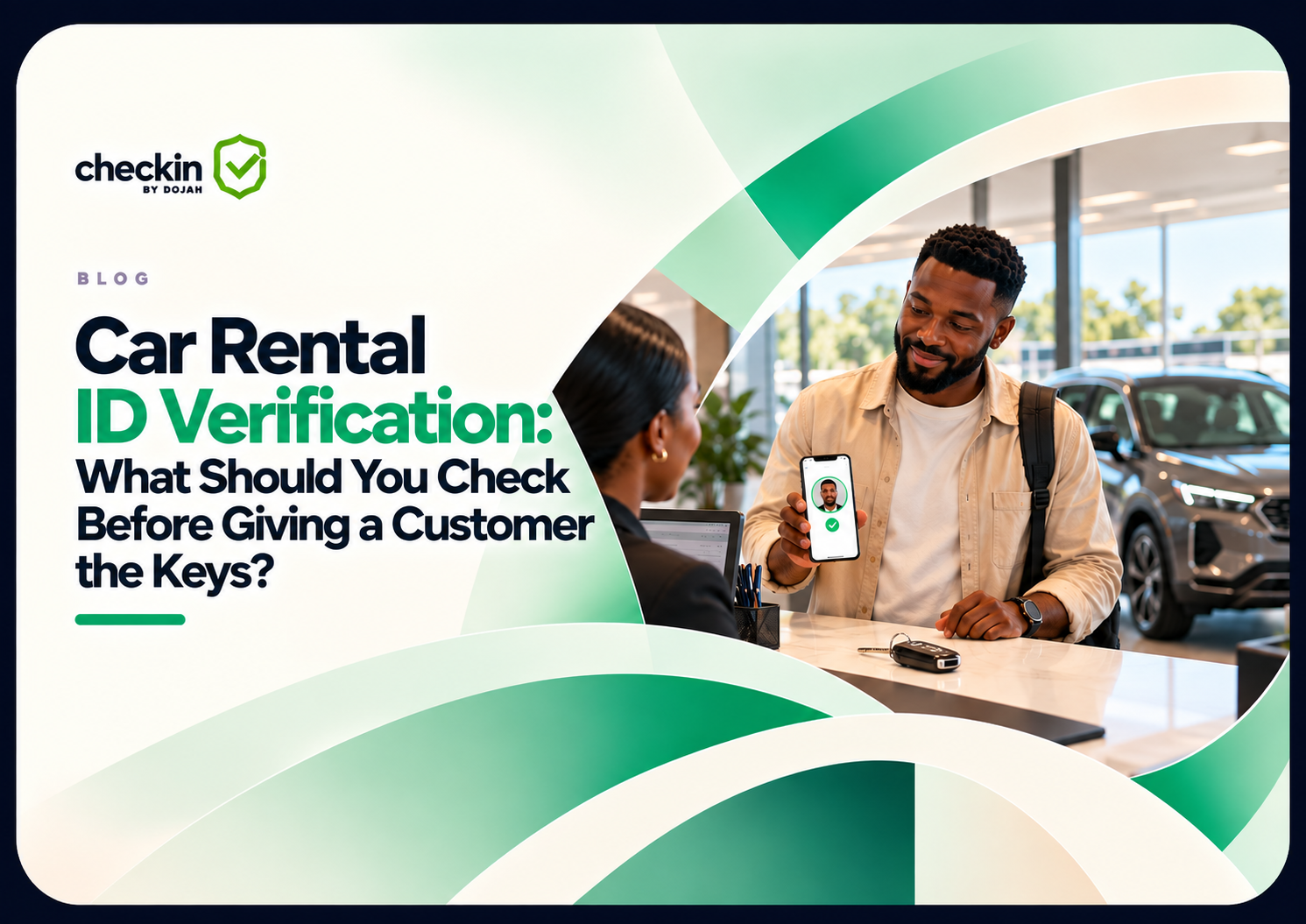
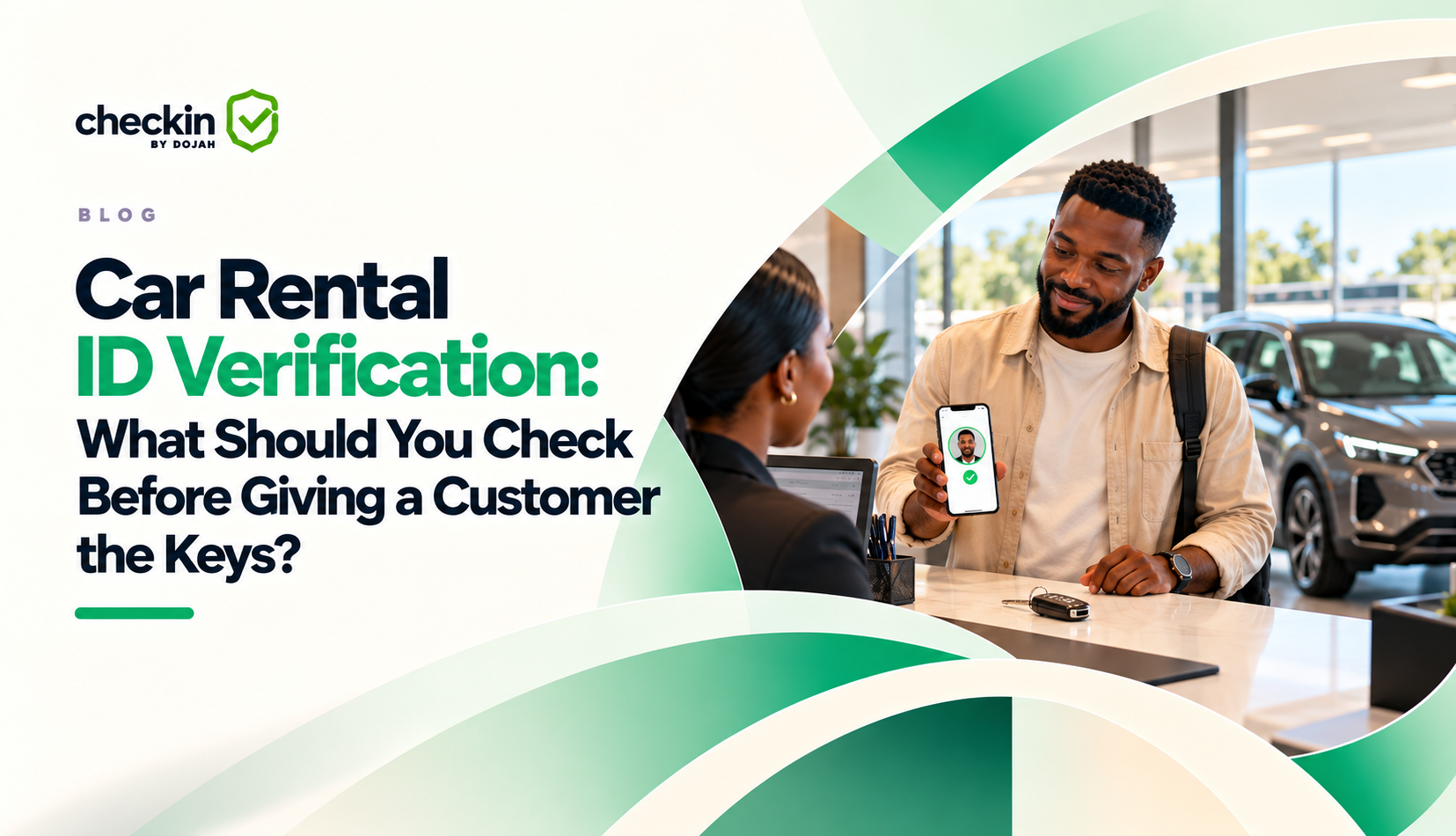
With CheckIn, a rental business can create a verification flow and send the customer a link to complete the required identity checks from their phone.
Depending on the checks included in the flow, this can include government ID verification, selfie/facial verification and liveness detection.
The customer can continue communicating with your business through the channels you already use while the identity check happens separately.
Once the verification is complete, your team can review the result and continue with the other requirements in your rental process. That distinction is important.
CheckIn handles the identity verification step. Your business still decides what driver's licence, payment, booking, insurance or other requirements must be satisfied before releasing the vehicle.
For rental companies that already collect customer IDs manually, the change is not necessarily about adding another hurdle at pickup. It's about making sure that when you're ready to hand over the keys, you have done more than collect an ID. You have verified the person you're handing the vehicle to.
Verify rental customers with CheckIn
Filed under